
Quiet axes for equipment that sits next to people
Analyzer carousels, pipetting heads and imaging tables run close to patients and technicians. Small sections, low noise, and motion that starts smoothly at low speed matter more than peak thrust.
Where the axis sits
Six places this industry puts a linear axis. The list is short on purpose — if the machine is not here, the constraint section below still applies.
Clinical analyzers
Sample and reagent carousels index repeatedly; the axis has to stop without ringing.
Pipetting and dispensing
A short vertical stroke with fine resolution, often on a multi-channel head.
Imaging and examination tables
Patient tables move slowly and must not hesitate or judder in front of the patient.
Sample handlers
Racks, trays and tube handlers with a short stroke and a high cycle count.
Dental and surgical positioners
Compact axes that hold position under light load, with cleanable surfaces.
What the axis has to survive
These three decide the build more often than the load rating does.
Noise
Ball recirculation and carriage design set the sound level. Near-silent travel is a selection criterion here, not a bonus.
Low-speed smoothness
At 1 to 5 mm/s a cheap axis sticks and releases. Preload and lubrication decide whether the motion is continuous.
Cleanability
Flat surfaces, no exposed lubricant pockets, and materials that survive a wipe-down.
Components that fit
Pulled live from the product centre — models this application actually uses.
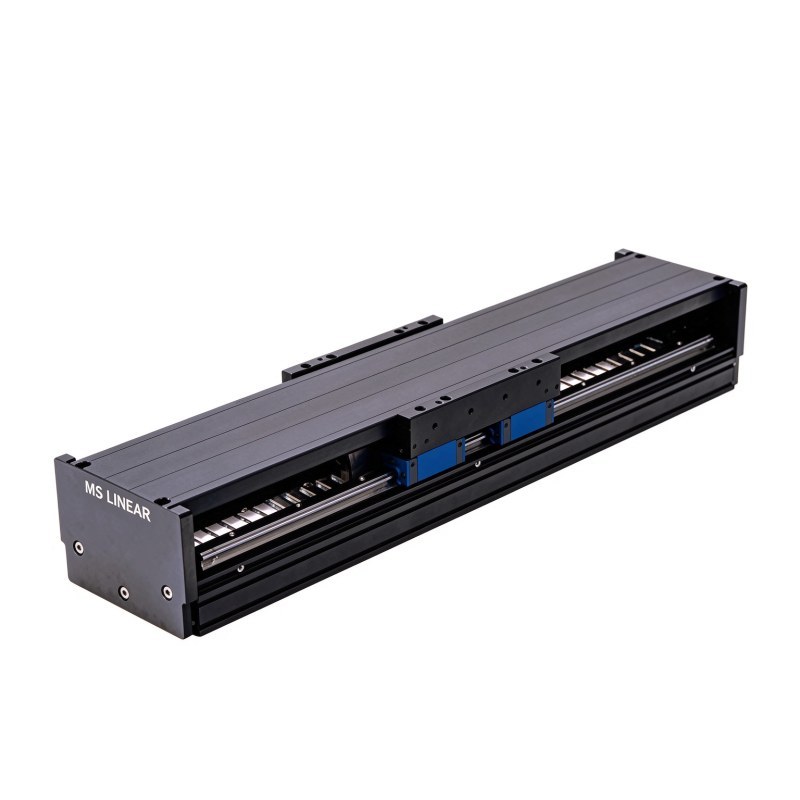
Single-Axis Positioning Stage: Standard
MS Linear standard single-axis stages feature easy installation for fast, precise…
View model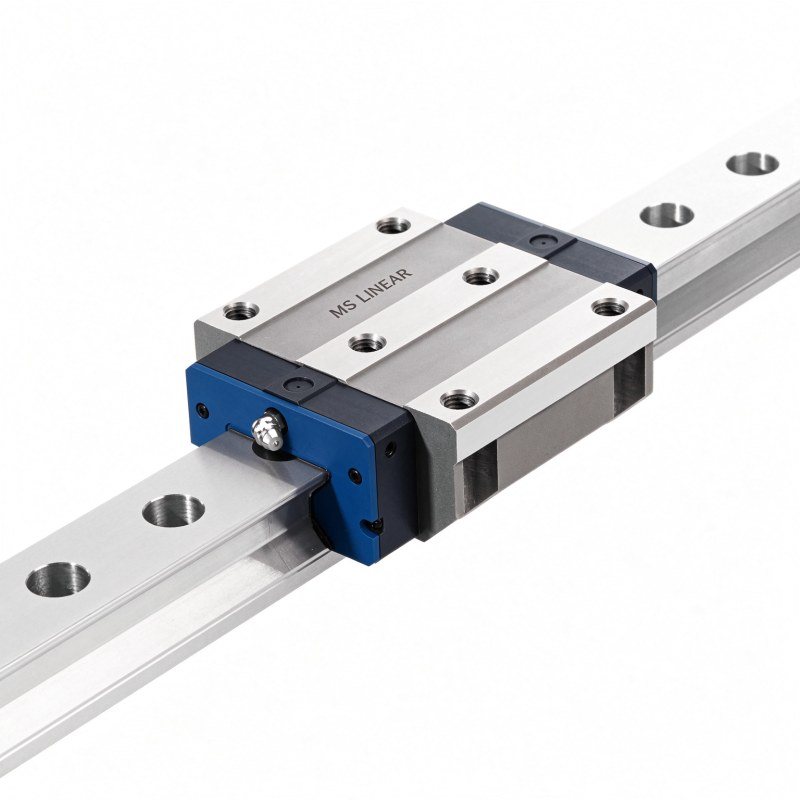
UR Series Ultra-Heavy Load Roller Linear Guideway
Designed specifically for heavy-load and high-precision machining equipment, the UR series…
View model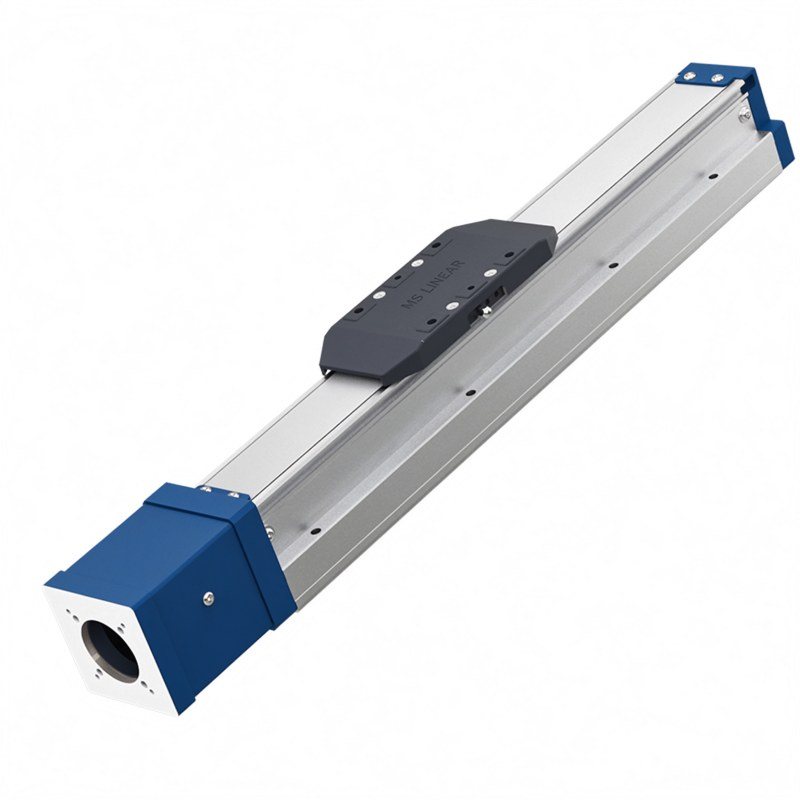
KC B-TYPE Single-Axis Robot
MS Linear single-axis robots have been fully upgraded. With its fully enclosed design, the…
View model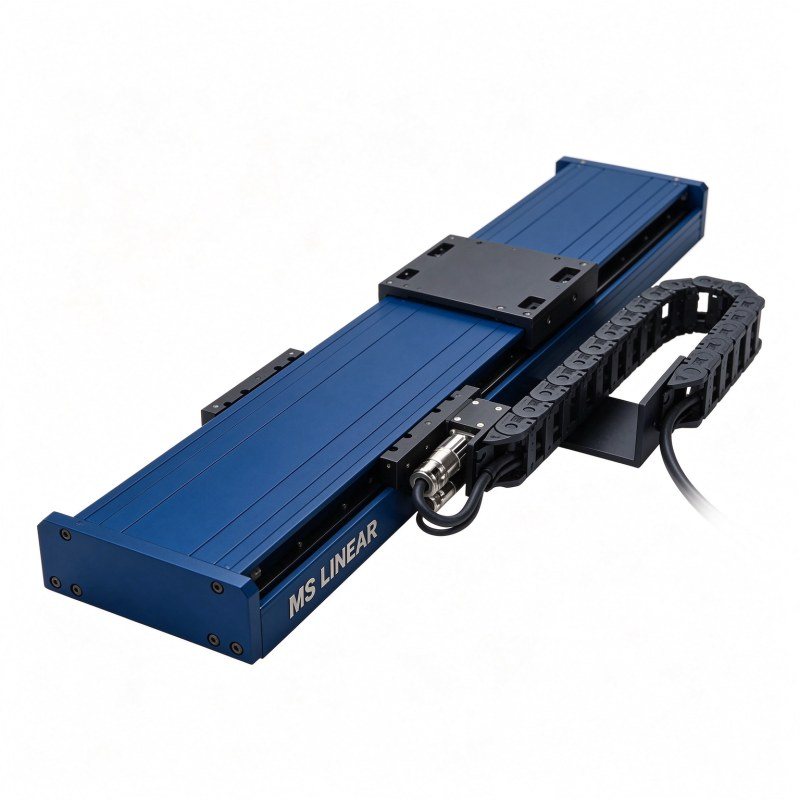
Single-Axis Positioning Stage: Customized
MS Linear single-axis stages provide fast, precise positioning, while direct linear motor…
View model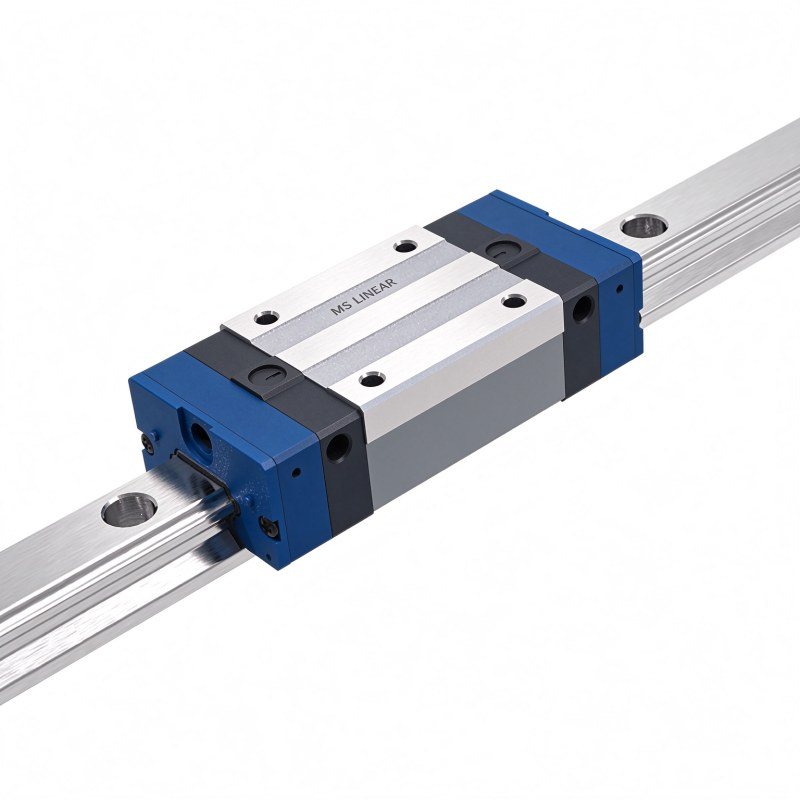
EL Self-Lubricating Linear Guideway
The EL self-lubricating module is specially designed for MG, HG and QH series linear…
View model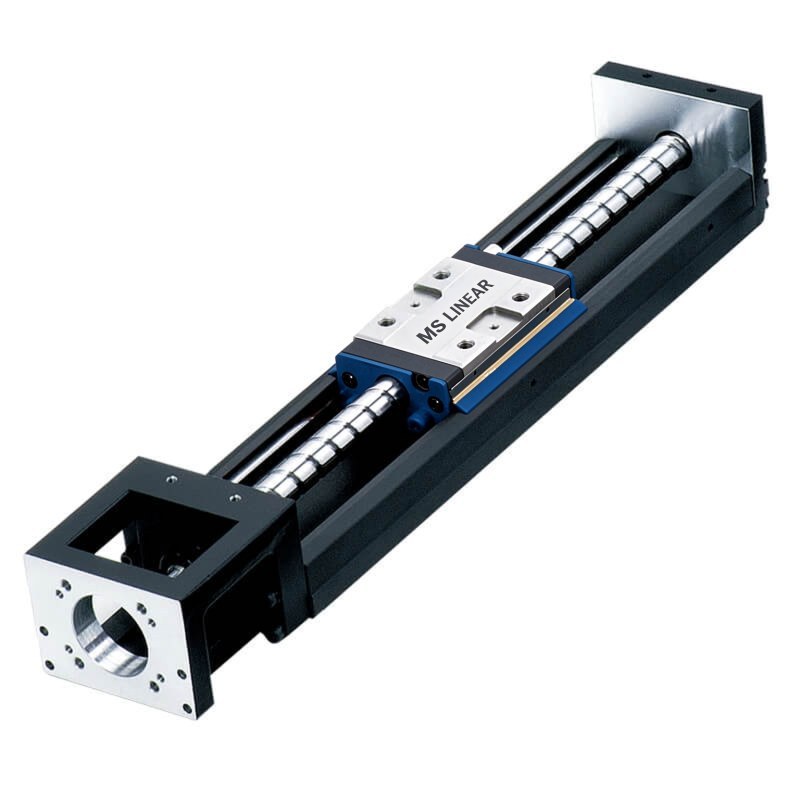
KK Series Single-Axis Robot
Featuring an integrated one-piece design of ball nut and linear slider, it offers high…
View modelSelection notes
Three things worth settling before the drawing is frozen.
Test at the real speed
A stage that is smooth at 50 mm/s can stutter at 2 mm/s. Ask for a sample and run it at the speed the assay actually uses.
Decide the drive before the rail
A screw adds a coupling and a motor behind the axis; a linear motor removes both but needs a magnet track. The envelope decides which one fits.
Wipe-down, not washdown
Most lab equipment is wiped, not sprayed. If it is sprayed, say so at enquiry stage so the sealing changes.
Questions that come up
How quiet is the travel?
Sound depends on speed, preload and carriage type. For patient-adjacent equipment we quote a low-noise carriage and run a sample at the working speed before the order is fixed.
Do you have rails small enough for a pipetting head?
Miniature sections start at 7 mm rail width, with matching short carriages. The head envelope usually sets the size rather than the load.
Can the axis be wiped with alcohol?
Standard anodised and stainless parts tolerate routine wipe-down. Solvent resistance of the seals and lubricant is checked per application.
Is a linear motor stage better than a screw axis here?
For very low speed and silent travel, yes. For a vertical axis that must hold position without power, a self-locking screw is the safer choice.
Buying Medical & Lab Motion Components from China
is Your Best Choice!
Factory-direct quality and worldwide shipping — standard parts leave the factory in 3–10 days, custom strokes and leads in 15–20 days (2–3 weeks). Send your drawing or the original part number and get a quotation within 24 hours.


Cookie preferences
Choose which categories this site may use. Necessary cookies cannot be switched off.