
Cycles per minute, not microns
Case packers, palletisers and inline handling run on repeatable strokes with a high cycle count. Here the axis is judged on uptime, dirt tolerance and how fast a worn belt can be changed.
Where the axis sits
Six places this industry puts a linear axis. The list is short on purpose — if the machine is not here, the constraint section below still applies.
Case packers and cartoners
Push and lift strokes repeated thousands of times per shift.
Palletisers and depalletisers
Vertical lift with a long stroke and a heavy head at the end of it.
Labellers and print heads
Short, accurate moves that keep the print gap constant.
Conveyor diverters
Side transfer where the axis is exposed to dust and product debris.
Pick-and-place gantries
Two or three axes over a moving product stream.
What the axis has to survive
These three decide the build more often than the load rating does.
Duty cycle
The line runs three shifts. Bearing life at 90% of the rated load is not the same as at 40%, and the quote should say which one it used.
Dirt
Cardboard dust and film offcuts get into open ways. Belt modules with covers survive longer than exposed rails.
Service access
A belt change should be minutes, not a teardown. Ask how the carriage is released before choosing the module.
Components that fit
Pulled live from the product centre — models this application actually uses.
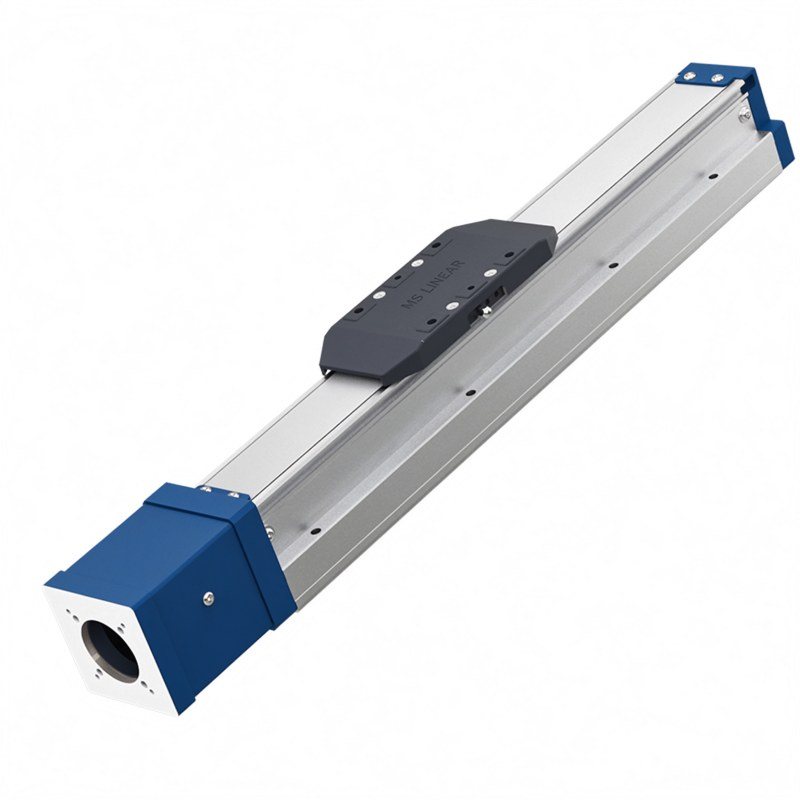
KC B-TYPE Single-Axis Robot
MS Linear single-axis robots have been fully upgraded. With its fully enclosed design, the…
View model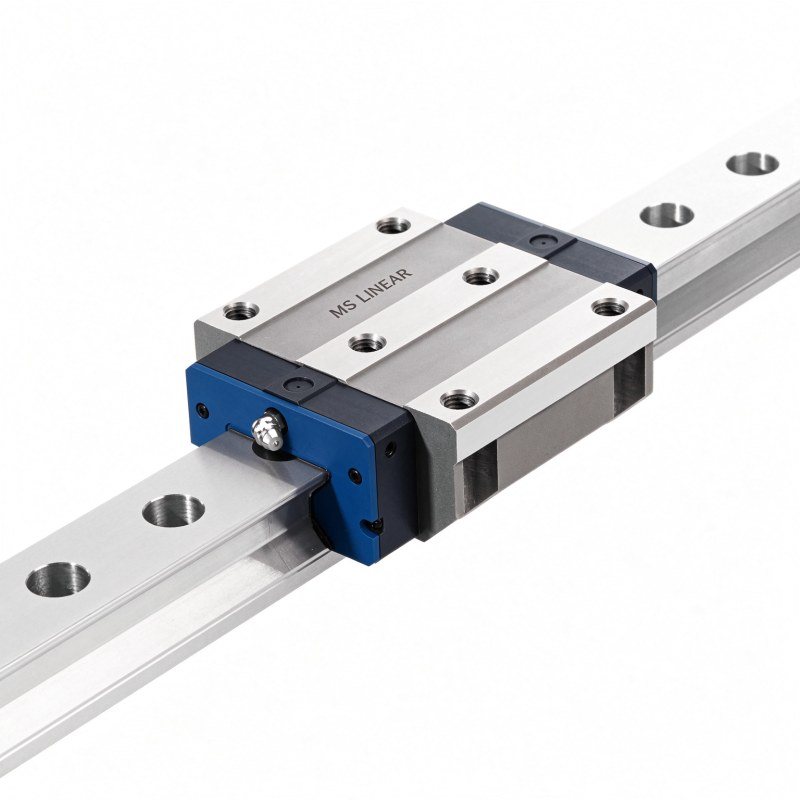
UR Series Ultra-Heavy Load Roller Linear Guideway
Designed specifically for heavy-load and high-precision machining equipment, the UR series…
View model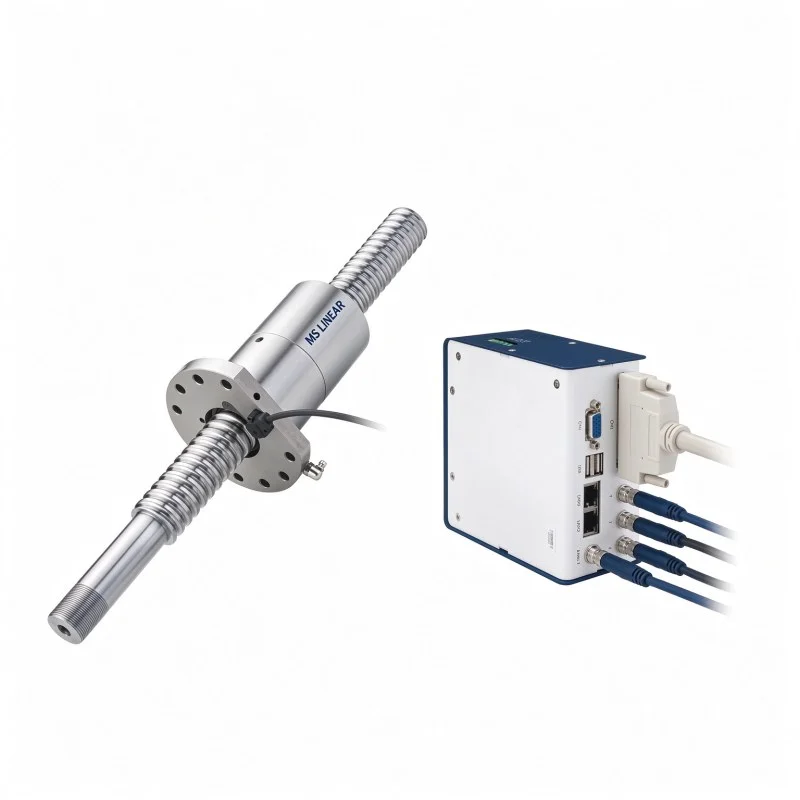
i4.0BS® Intelligent Ball Screw
The ball screw is equipped with sensors and features vibration alerts, temperature…
View model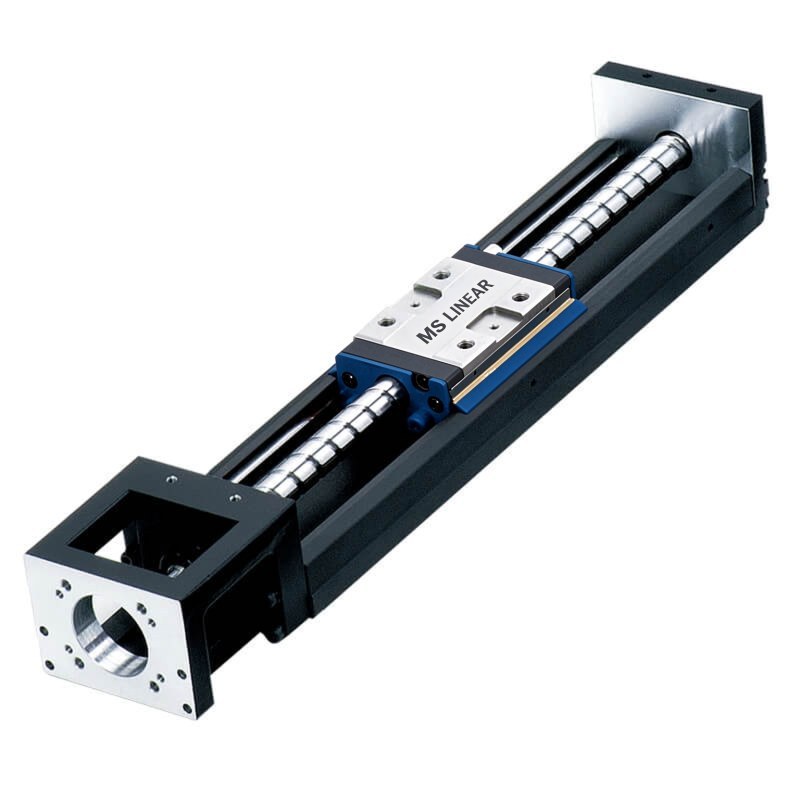
KK Series Single-Axis Robot
Featuring an integrated one-piece design of ball nut and linear slider, it offers high…
View model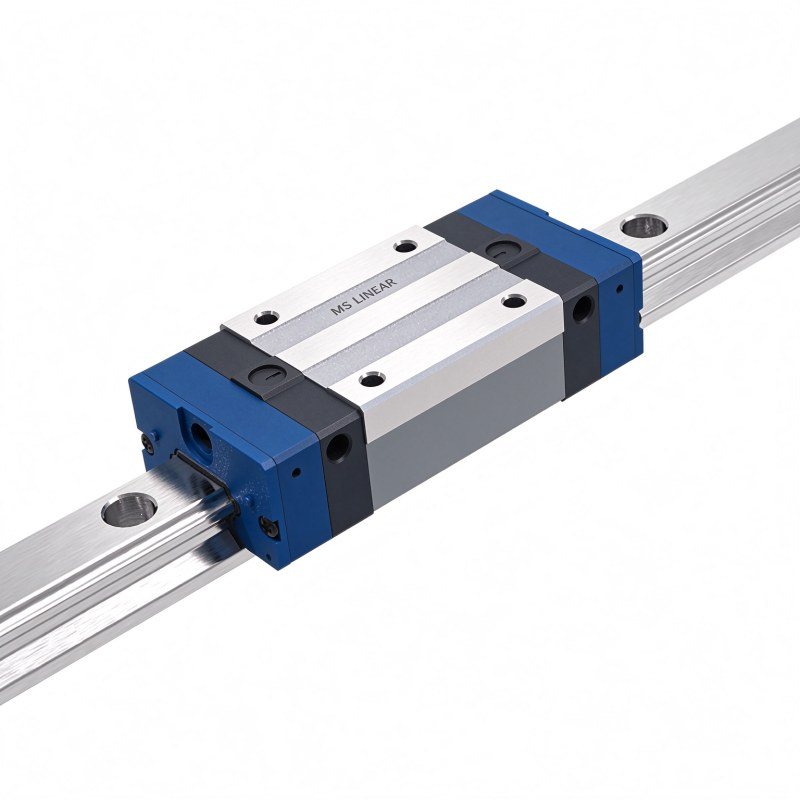
EL Self-Lubricating Linear Guideway
The EL self-lubricating module is specially designed for MG, HG and QH series linear…
View model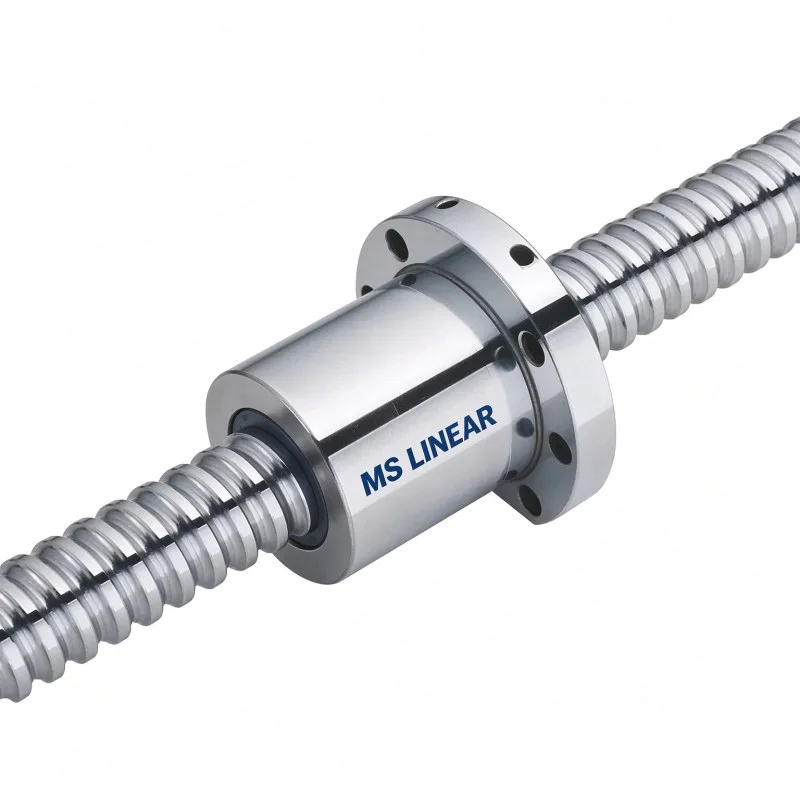
Super S Ball Screw
Low noise, lightweight design, high rotation speed and high acceleration/deceleration.
View modelSelection notes
Three things worth settling before the drawing is frozen.
Size for the cycle, not the load
A palletiser axis spends most of its life accelerating an empty head. Give us the cycle time and the moving mass, not just the payload.
Belt stretch shows up as drift
On long belt axes, repeatability is set by tension and pulley wear. If the station needs position feedback, say so before the module is picked.
Plan the cable route
Cable carriers add height above the module. On a line with a low guard frame that is the dimension that fails first.
Questions that come up
Which module for a 2 m vertical lift?
A belt module handles the stroke and the speed; a screw module holds position when power is removed. For a palletiser that parks loaded, the screw version is usually the safer one.
Can the modules run in a washdown area?
Food-adjacent washdown needs stainless and IP-rated sealing, which is a different build. Standard modules suit dry packaging lines.
How long does a belt change take?
On the semi-closed KA range the carriage cover comes off and the belt is re-tensioned on the bench. We can quote a spare belt with the module so the change is done in one shift.
Do you supply the motor and drive?
Modules can be quoted bare, or with servo and drive matched to the axis. Bare units are the usual choice when the OEM already standardises on one control platform.
Buying Packaging Motion Components from China
is Your Best Choice!
Factory-direct quality and worldwide shipping — standard parts leave the factory in 3–10 days, custom strokes and leads in 15–20 days (2–3 weeks). Send your drawing or the original part number and get a quotation within 24 hours.


Cookie preferences
Choose which categories this site may use. Necessary cookies cannot be switched off.