
The axis behind the arm
Gantries, seventh axes and end effectors carry the robot, not the workpiece. Weight, cable routing and repeatable homing decide the build, and the gearbox decides how much of the payload reaches the part.
Where the axis sits
Six places this industry puts a linear axis. The list is short on purpose — if the machine is not here, the constraint section below still applies.
Gantry and Cartesian robots
Two or three axes over a work envelope, often with a long X stroke.
Robot seventh axis
A linear track that moves the whole arm along the cell.
End effectors and grippers
Short-stroke actuation at the wrist, where mass is the enemy.
AGV and AMR lifts
Vertical lift inside a moving platform, with the battery and controls packed around it.
Assembly and test cells
Indexing tables and slides inside a guarded cell.
What the axis has to survive
These three decide the build more often than the load rating does.
Moving mass
Every kilogram on the carriage is acceleration the drive has to produce. Light sections beat oversized rails.
Cable management
A seventh axis drags a dress pack the length of the track. Carrier space is a layout decision, not an accessory.
Homing repeatability
A cell that re-homes every shift needs a switch position that does not drift with temperature.
Components that fit
Pulled live from the product centre — models this application actually uses.
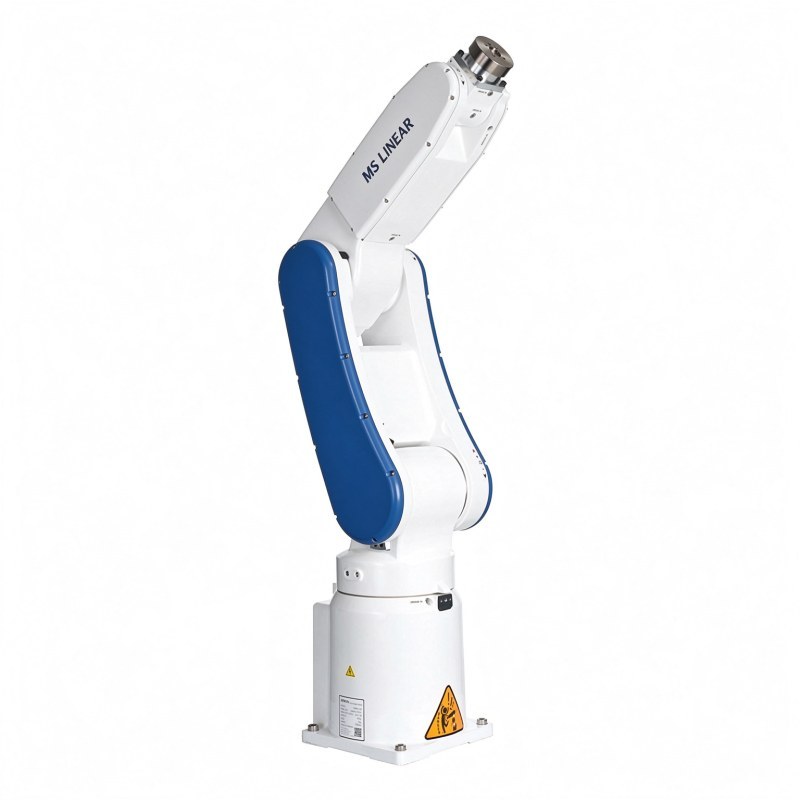
RA605 Series Articulated Robot Arm
It offers six-axis degrees of freedom, high speed, high repeatability and high dust and…
View model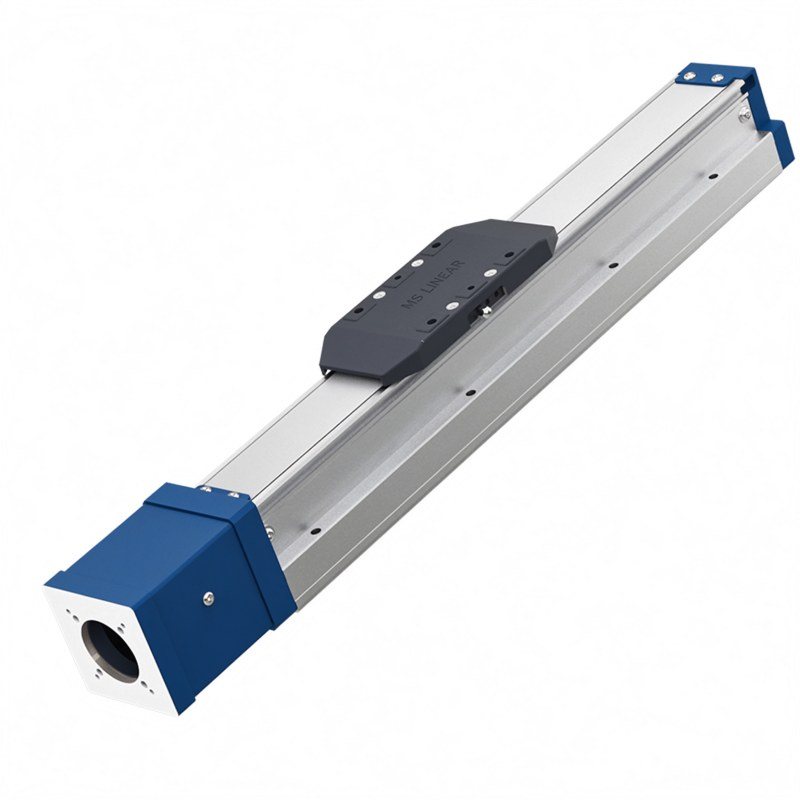
KC B-TYPE Single-Axis Robot
MS Linear single-axis robots have been fully upgraded. With its fully enclosed design, the…
View model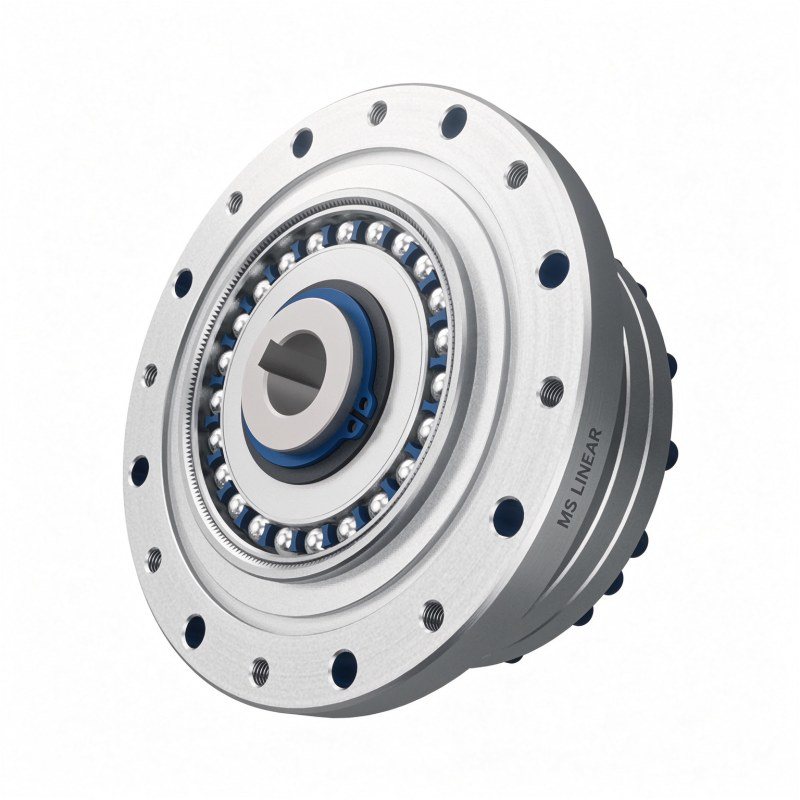
Standard Series Harmonic Drive
The harmonic drive features high precision, high efficiency, high torsional rigidity and…
View model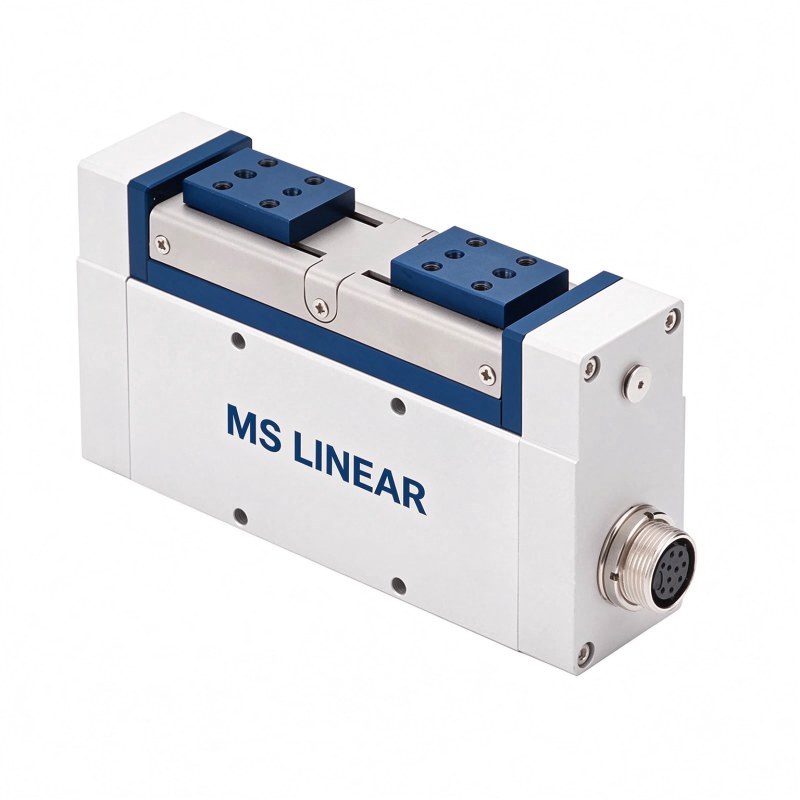
Electric Gripper X Series
Driven by a stepper motor with encoder and transmitted through a single-axis robot with a…
View model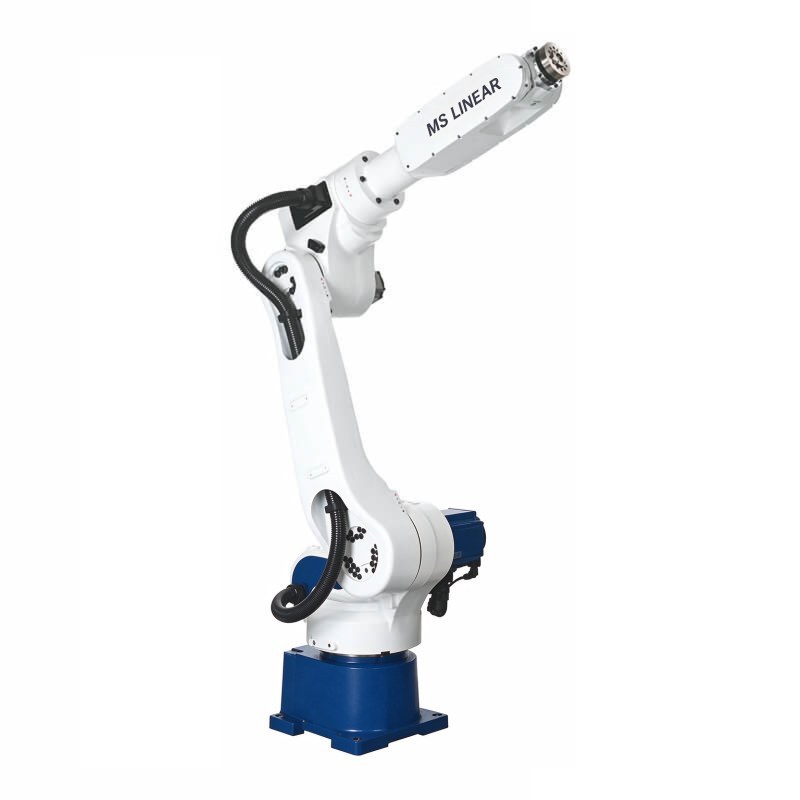
RA610 Series Articulated Robot Arm
It offers six-axis degrees of freedom, high speed, high repeatability and high dust and…
View model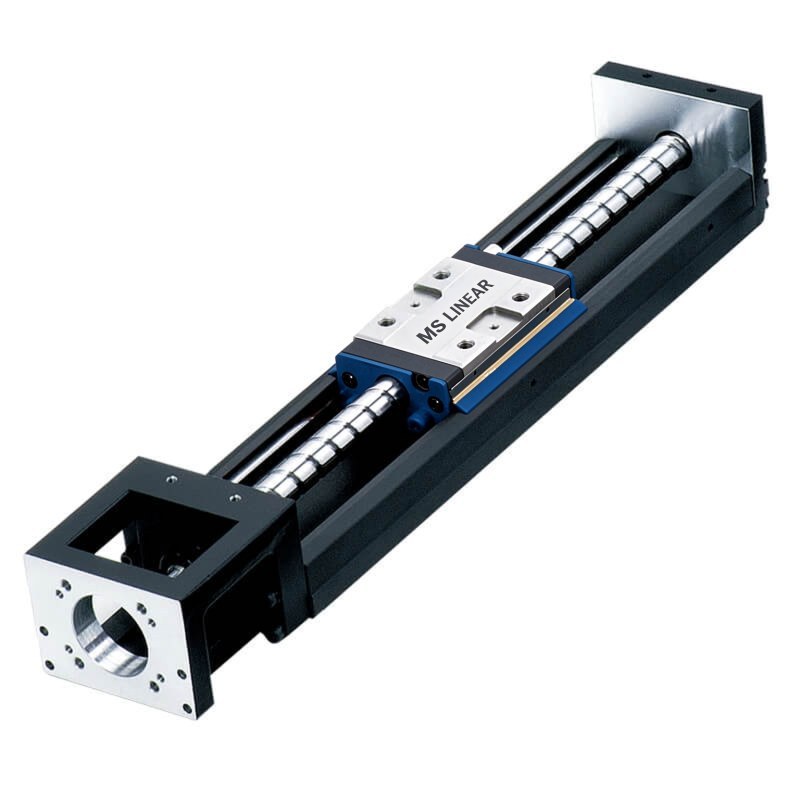
KK Series Single-Axis Robot
Featuring an integrated one-piece design of ball nut and linear slider, it offers high…
View modelSelection notes
Three things worth settling before the drawing is frozen.
Choose the rail by stiffness, not load
A gantry carriage is loaded in every direction at once. Two rails spaced apart resist the moment better than one heavy rail.
Gearbox before motor
On a wrist axis the reducer sets repeatability. Pick the ratio from the required cycle and inertia, then size the motor around it.
Leave room for the dress pack
On a track longer than 3 m the cable carrier needs its own channel. It is the detail that turns a layout into a rebuild.
Questions that come up
Can you build a gantry to a given work envelope?
Yes. Send the envelope, the payload and the required cycle time; the axes, drives and frame are quoted as one build rather than as loose parts.
What repeatability do the harmonic drives hold?
Zero-backlash by design, with repeatability set by the reducer size and the encoder. State the required figure and we match the reducer to it.
Do you supply the seventh-axis track with the dress pack?
The track is quoted with carrier mounting points and cable channel space; the dress pack itself usually comes from the robot supplier.
Is a rack-and-pinion better for a long track?
Above roughly 5 m a rack is usually cheaper and faster. Below that a belt or screw axis holds position with less commissioning work.
Buying Robotics Motion Components from China
is Your Best Choice!
Factory-direct quality and worldwide shipping — standard parts leave the factory in 3–10 days, custom strokes and leads in 15–20 days (2–3 weeks). Send your drawing or the original part number and get a quotation within 24 hours.


Cookie preferences
Choose which categories this site may use. Necessary cookies cannot be switched off.