
Motion that stays clean inside the tool
Wafer handling, EFEM transfer and inspection stages built around miniature guideways, wafer robots and direct-drive tables. The envelope is small, the duty cycle is long, and the axis sits close to the process chamber.
Where the axis sits
Six places this industry puts a linear axis. The list is short on purpose — if the machine is not here, the constraint section below still applies.
EFEM wafer transfer
The handling arm inside the EFEM runs on short-stroke miniature rails and a light Z-axis. Frame space, not load, sets the size.
FOUP loadports
Door opening and wafer mapping need a repeatable short stroke with almost no lateral play.
Metrology & inspection stages
Inspection axes move slowly and stop hard. Straightness and settling time matter more than top speed.
Wafer robots
Atmospheric and vacuum robots sized for 200 mm and 300 mm handling, with end effectors matched to the wafer.
Bonding & dispense heads
Bond heads and dispense nozzles need fine positioning at low speed without stick-slip.
Cleanroom linear modules
Enclosed modules keep lubricant and wear particles away from the process chamber.
What the axis has to survive
These three decide the build more often than the load rating does.
Particles
Dry-running or low-particle lubrication, sealed carriages, and no grease reservoir sitting in the airflow.
Footprint
Miniature sections, short strokes, and the motor built into the axis instead of bolted onto the side.
Repeatability
The axis has to come back to the same position after thousands of cycles, not only on the first pass.
Components that fit
Pulled live from the product centre — models this application actually uses.
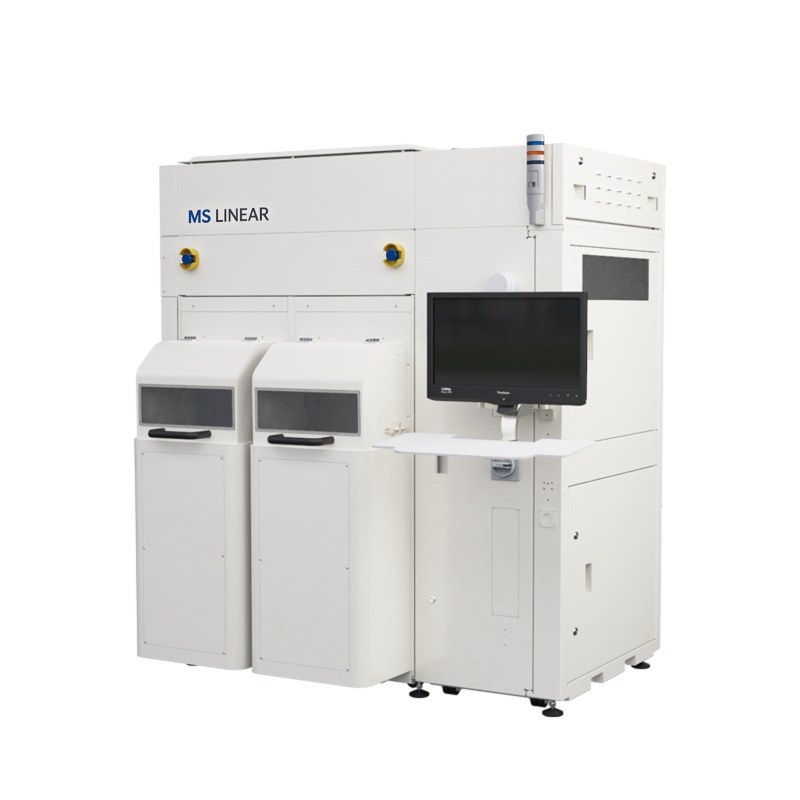
EFEM220-D13 Wafer Transfer System
MS Linear's wafer transfer system (EFEM) is a complete automation system. Through vertical…
View model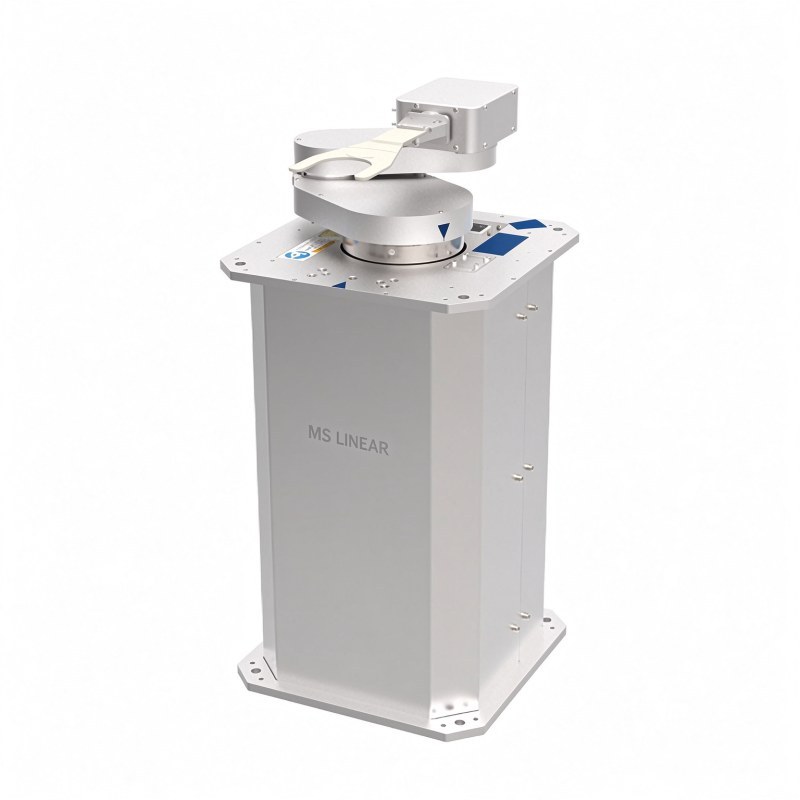
RWSE Wafer Robot
Direct-drive motor transmission design with repeatability of ±0.1 mm; optional wafer flip…
View model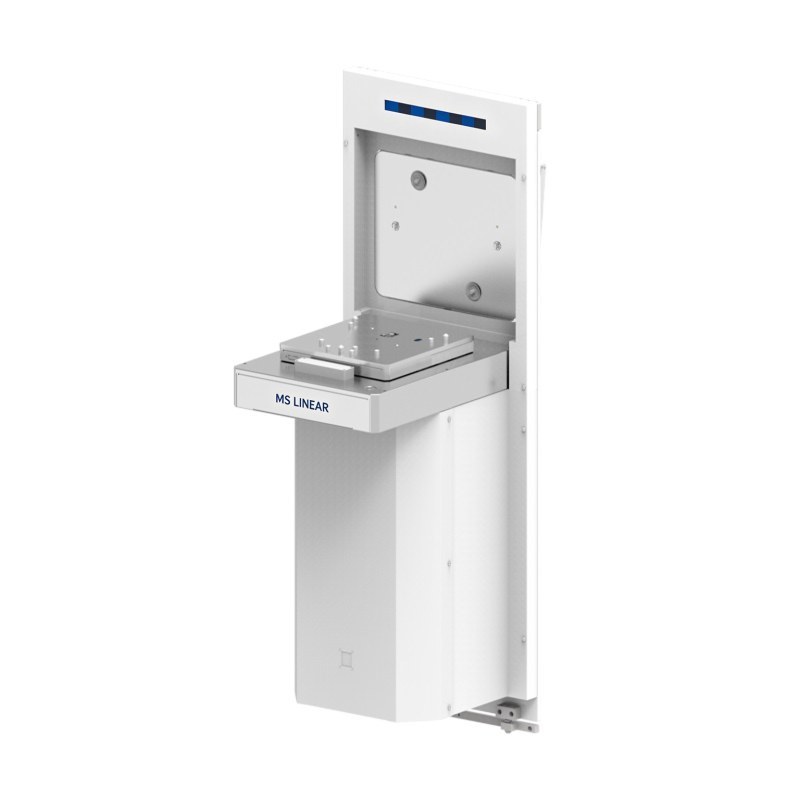
Wafer Loader / Load Port
Multiple specifications share common components.
View model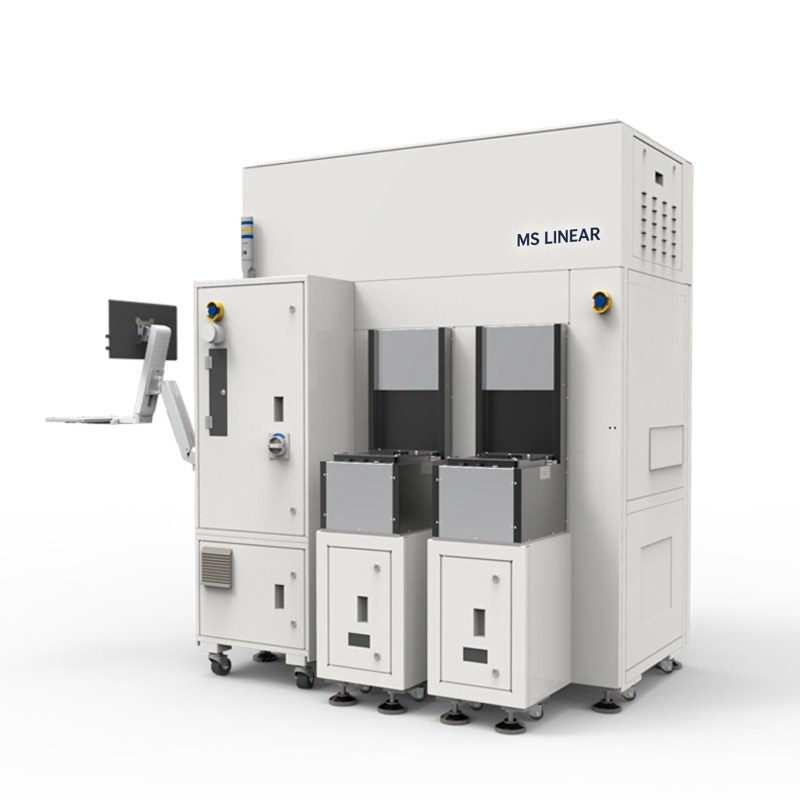
EFEM320-D01 Wafer Transfer System
MS Linear's wafer transfer system (EFEM) is a complete automation system. Through vertical…
View model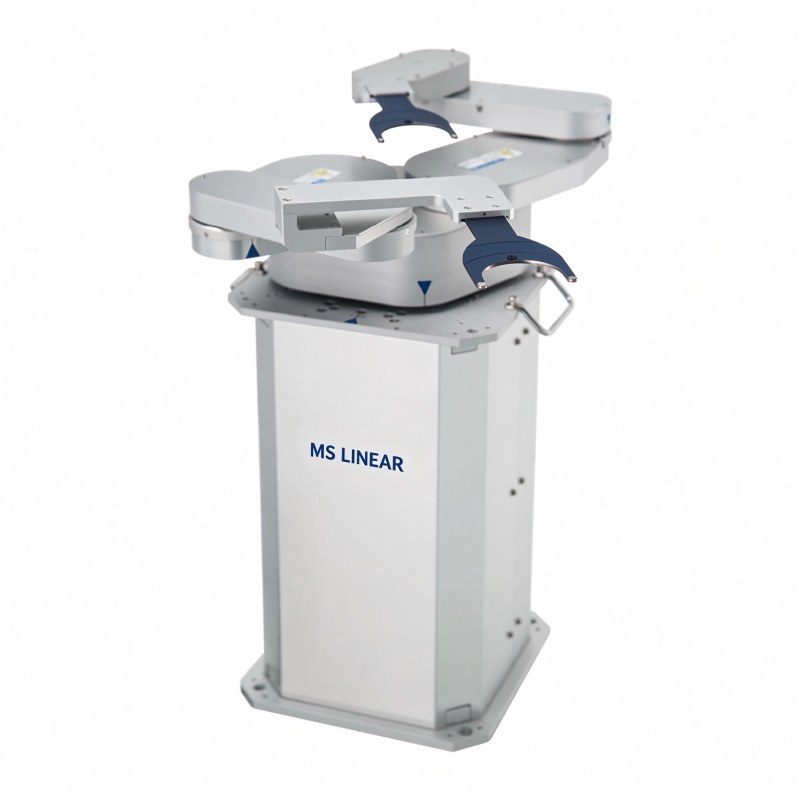
RWDE Wafer Robot
Direct-drive motor transmission design with repeatability of ±0.1 mm; optional wafer flip…
View model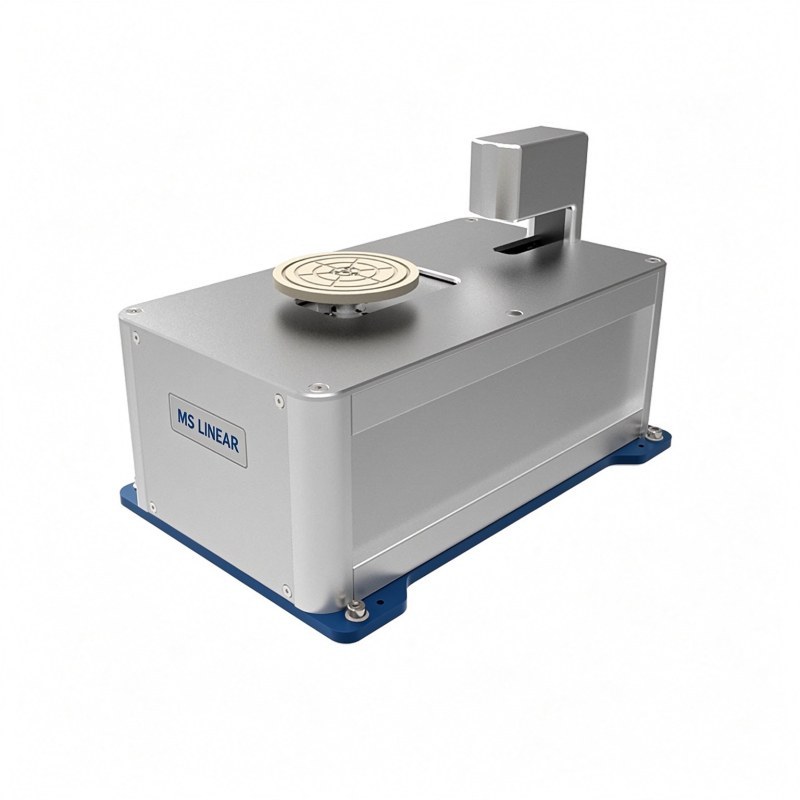
Wafer Aligner
Industry's smallest footprint; supports detection of various materials and contours…
View modelSelection notes
Three things worth settling before the drawing is frozen.
Start from the mounting holes
In an EFEM the rail width is usually fixed by the frame. Send the drawing and we work backwards from the bolt pattern and stack height.
Lubrication is a process decision
Grease choice changes particle count. Tell us the cleanroom class and whether the axis sits upstream or downstream of the chamber.
Repeatability before speed
Inspection axes rarely need high speed. Preload and straightness decide the result, and both are set at assembly.
Questions that come up
Can your guideways run inside a vacuum chamber?
Atmospheric rails are not built for vacuum. For vacuum we supply dry-lubricated or MoS2-coated versions with vented carriages; the configuration depends on pressure and bake-out temperature.
What sizes fit a 300 mm wafer EFEM?
Miniature rails in 7, 9, 12 and 15 mm sections cover most handling axes, with wafer robots sized for 300 mm. Send the frame drawing and we confirm the stack height before quoting.
Do you supply the robot and the rail as one set?
Yes. Wafer robots, transfer systems and the guideways they run on can be quoted together so the interfaces are matched before shipment.
How is grease kept out of the process chamber?
Enclosed modules and sealed carriages, plus dry-running options where the axis sits close to the chamber. The choice is made per axis, not per tool.
Buying Semiconductor Motion Components from China
is Your Best Choice!
Factory-direct quality and worldwide shipping — standard parts leave the factory in 3–10 days, custom strokes and leads in 15–20 days (2–3 weeks). Send your drawing or the original part number and get a quotation within 24 hours.


Cookie preferences
Choose which categories this site may use. Necessary cookies cannot be switched off.